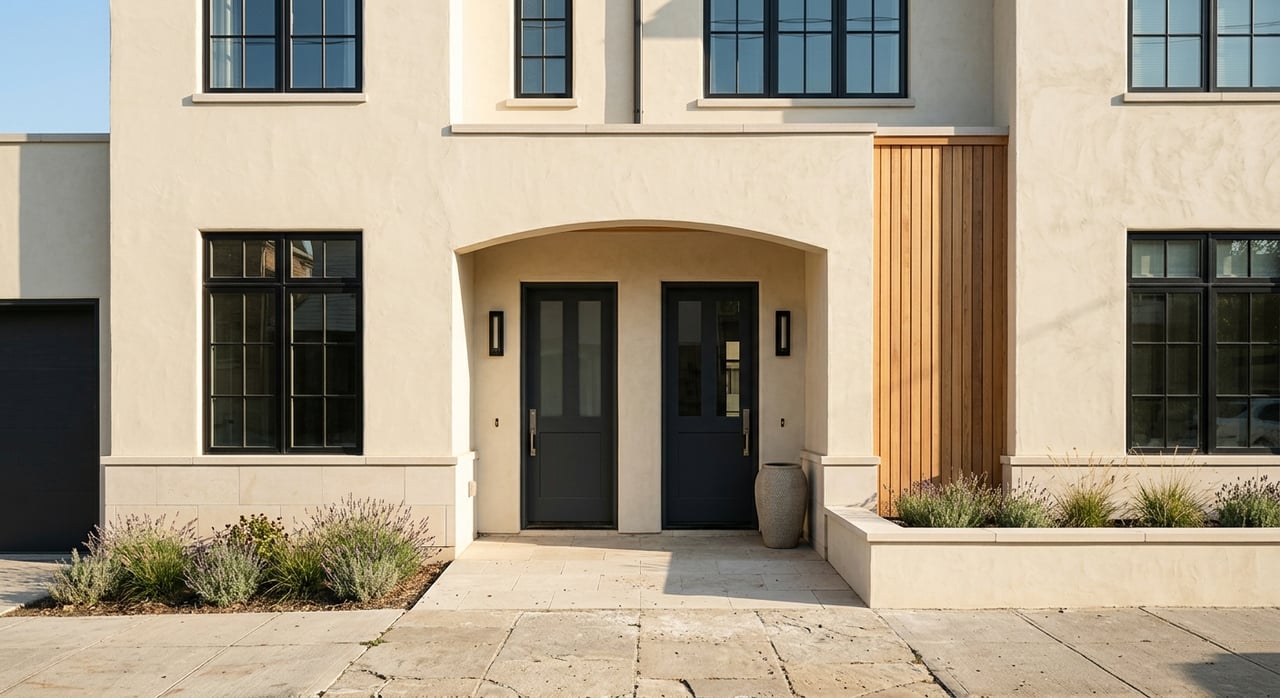
Sunnyvale Townhome vs House: How to Choose Wisely
July 16, 2026
July 16, 2026
Wondering whether a townhome or a house makes more sense in Sunnyvale? You are not alone. In a market where homes move quickly and prices vary widely by property type, choosing the right fit can affect your budget, monthly costs, and long-term flexibility. This guide breaks down the key trade-offs so you can make a smart, confident decision. Let’s dive in.
Sunnyvale is still a fast-moving market. In June 2026, homes were selling in about 11 days on average and getting roughly 5 offers, which tells you that well-priced properties can attract strong competition.
Price is the biggest reason many buyers compare attached and detached homes so closely here. Zillow’s late June 2026 snapshot put Sunnyvale’s typical home value at about $2.08 million, while MLSListings’ March 2026 data showed a clearer split by property type.
For Sunnyvale, MLSListings groups condos and townhomes together as attached homes. In March 2026, the median sale price for single-family homes was $2.858 million, while the median for attached homes was $1.4 million.
That is a major gap. At the median, detached homes were about 2.04 times the price of attached homes, which means single-family houses carried about a 51% higher median price.
Price per square foot also tells an important story. Single-family homes posted a median of $1,583 per square foot, compared with $903 per square foot for attached homes.
Still, your search should not stop at the label. Current browse examples show attached homes listed from about $998,000 to $1.598 million, while detached homes can start around $1.588 million and climb much higher. That overlap means a smaller house and a premium townhome can sometimes compete for the same buyer.
If your first goal is getting into Sunnyvale at a lower price point, an attached home often gives you the clearest path. Citywide median data shows attached homes remain the lower-entry option.
Townhomes can also reduce some of the day-to-day exterior maintenance burden. In a common-interest development, the HOA is generally responsible for maintaining, repairing, and replacing common areas, while you are responsible for your separate interest. Depending on the governing documents, there can also be a split for exclusive-use common areas.
For many buyers, that setup creates a simpler ownership experience. If you prefer a smaller footprint and less exterior upkeep, a townhome may line up well with your priorities.
A lower purchase price does not always mean a lower monthly payment. Sunnyvale attached-home examples in the current sample show HOA dues in the low hundreds per month, including $355 and $423 monthly.
That recurring cost matters. When you compare a townhome with a house, you should look beyond the list price and model the full monthly carrying cost, including mortgage, property taxes, insurance, and HOA dues.
California law also gives you an important disclosure path when buying in a common-interest development. Before transfer, the seller must provide a broad package that can include governing documents, current assessments, unpaid assessments or fines, unresolved violation notices, any rental prohibition in the governing documents, requested board minutes, and the latest inspection report.
Reserve strength matters too. Reserve studies help estimate future costs for major common-area items like roofs and pavement, and they can give you a clearer sense of whether the association is financially prepared for future repairs.
If your top priorities are privacy, lot control, and future flexibility, a detached house usually has the edge. You are not dealing with the added HOA layer that can limit exterior changes or impose ongoing rules through CC&Rs.
That does not mean you can do anything you want. In Sunnyvale, detached-home expansion is still shaped by city standards such as setbacks, lot coverage, floor-area ratios, and height limits in applicable single-family districts.
Even so, detached homes often give you more room to think long term. If you want the possibility of remodeling, expanding, or reworking the property later, a house may better support that plan.
Sunnyvale publishes permit resources for single-family remodels and accessory dwelling units, and the city has a dedicated ADU process and checklist. That makes future expansion an important part of the house-versus-townhome decision.
If you are buying with a multi-stage plan in mind, this can be a real advantage. A detached property may offer more options for adding space or reconfiguring how the property functions over time, subject to city rules and permits.
By contrast, attached-home buyers need to consider not just the physical unit, but also HOA restrictions. California disclosure rules require rental restrictions in governing documents to be disclosed, which means future flexibility can be narrower than you expect if you do not review the documents carefully.
The market behaves differently by property type. In the March 2026 MLSListings snapshot, single-family homes sold in a median of 8 days with a 111% sale-to-list ratio and 1.3 months of inventory.
Attached homes moved more slowly, with a median of 15 days on market, a 103% sale-to-list ratio, and 3.1 months of inventory. That suggests detached homes have been seeing tighter supply and stronger buyer competition.
For you, that can cut two ways. A house may offer stronger demand and a higher land premium, but it may also require a more aggressive strategy to win. A townhome may give you a lower entry point and a bit more breathing room, depending on the listing and price band.
The right answer depends less on what is “better” and more on how you plan to live, spend, and hold the property. Start with your real priorities, not just the property type.
A townhome may fit best if you want:
A detached house may fit best if you want:
In Sunnyvale, property type should be one filter, not your only filter. Because price overlap exists at the low end of detached homes and the high end of attached homes, you may miss good options if you search too narrowly.
A better approach is to compare homes by total monthly cost, condition, location within Sunnyvale, and long-term fit. That lets you weigh whether paying more for a detached property actually gives you the flexibility you want, or whether a well-run attached community offers better overall value.
When evaluating an attached home, focus on:
When evaluating a detached home, focus on:
In Sunnyvale, attached homes usually offer the lower price of entry, while detached homes command a stronger premium for land, privacy, and flexibility. Neither option is automatically the better move. The smarter move is the one that fits your budget, your monthly comfort level, and your long-term plans.
In a competitive market like Sunnyvale, small details can have a big financial impact. If you compare townhomes and houses with a clear strategy, you can avoid chasing the wrong fit and focus on the property that supports your goals.
If you want help weighing Sunnyvale townhomes versus houses with a practical, numbers-first approach, connect with Aaron Derbacher for guidance tailored to your search.
Stay up to date on the latest real estate trends.
Aaron brings a breath of fresh air to an often-chaotic California Real Estate process. He is committed to going the extra mile for every client during every transaction, something he sees as the most important fiduciary duty for any real estate professional.
16780 LARK AVE FRNT LOS GATOS CA 95032