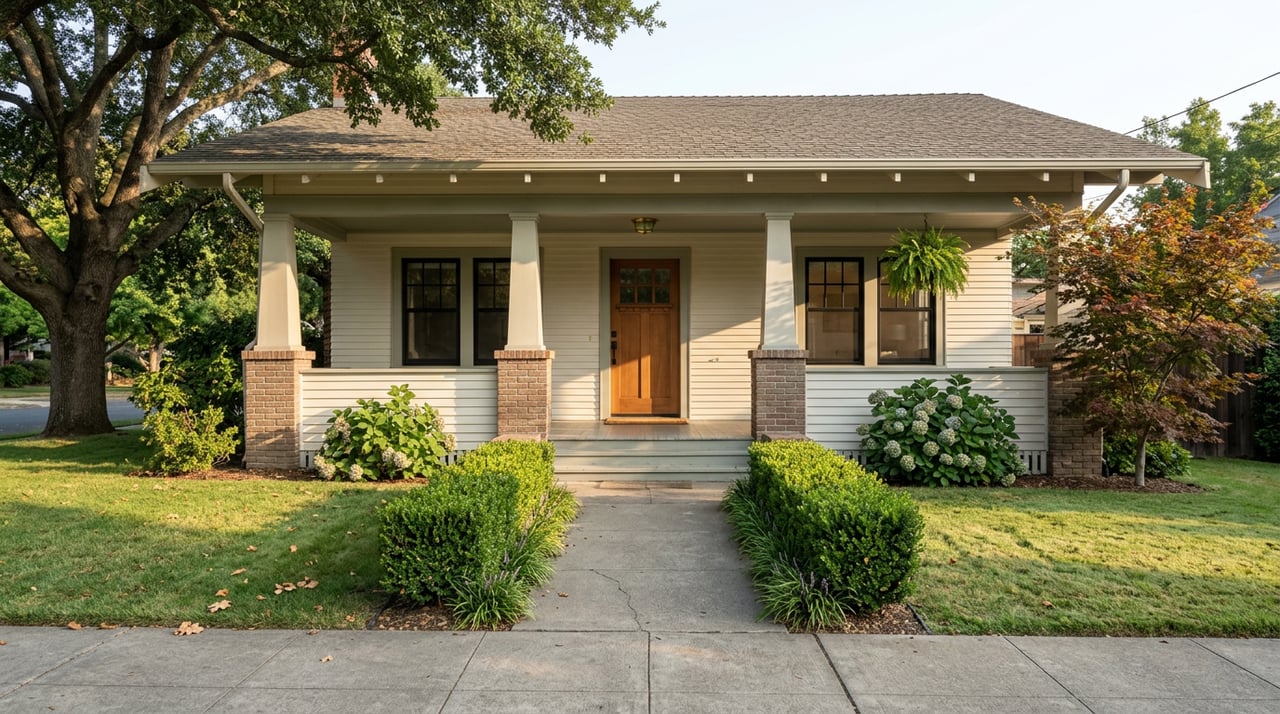
Why Willow Glen Founders Day Still Matters in September
August 13, 2026
August 13, 2026
Most Septembers, Lincoln Avenue closes to cars for a parade that has nothing to do with a football team, a saint's feast day, or anyone's birthday you'd recognize. It marks nine years, 1927 to 1936, when Willow Glen was not a neighborhood of San Jose at all. It was its own city, with its own council, its own budget, and its own fight with a railroad that wanted to lay track straight through what is now the busiest sidewalk in the 95125 zip code.
If you already live here, you have probably walked past the Founders Day banners without knowing exactly what they're marking. That's fair. Even the neighborhood's own historians aren't entirely sure why the tradition exists, and the fact that a nine-year municipal experiment still shapes what businesses can and cannot open on your street today is the part worth understanding.
In the 1920s, Southern Pacific Railroad wanted to route its main line down what was then called Willow Glen Road. Rather than let that happen, residents incorporated their own city on September 8, 1927. Formally, Willow Glen was classified as "a sixth-class city under California statutes, the smallest classification allowed." The railroad did not go quietly. According to the archival finding aid held by the San José Public Library, the railroad fought back, taking it all the way to the United States Supreme Court, but they were unable to stop Willow Glen from incorporation.
Here's the detail most people miss: the tracks didn't vanish. Southern Pacific proposed to re-route down Lincoln Avenue, and to forestall that, Willow Glen incorporated as a city in 1927, with the railroad instead re-routed through a then-unincorporated area now known as North Willow Glen, where its principal user is now Caltrain. The line the founders fought off didn't disappear. It moved a few blocks north, and it's still running.
Independence was short-lived, and not because the neighborhood lost interest in self-governance. It was sewage. Willow Glen sat on marshy ground with no integrated sewer system, and most homes relied on individual septic tanks. As the library's finding aid puts it, consolidation with San Jose became a viable option due to Willow Glen's lack of an integrated sewer system, and to residents there appeared to be only two choices: build a sewage system in Willow Glen or become annexed to San José and connect with its sewer system. A state surtax on septic-owning property owners, known as the Mattoon Act, made the decision easier. On September 4, 1936, residents voted to dissolve their own city and join San Jose's.
That the vote to annex fell within four days of the anniversary of incorporation nine years earlier is not a coincidence anyone planned. It's why Founders Day sits in September at all: the event celebrates the rich history, cultural heritage, and progressive present of the neighborhoods, homes, and community of Willow Glen, with a festive parade that proceeds down Lincoln Avenue. Even the reason for the celebration is debated. Wikipedia notes the origins of Founders' Day are not known, though archives of the Willow Glen Resident newspaper indicate it originates from the area's nine years of independence from San Jose between September 8, 1927, and September 4, 1936, with a competing theory crediting Antonio Suñol, who built Laura Ville in 1847 and is considered the community's founder.
Losing the city hall didn't mean losing the habit of protecting the street. Lincoln Avenue's merchants have organized informally since the 1930s, and the modern Willow Glen Business Association, formed in 1984, has spent decades keeping national chains off the avenue and preserving its independent character. The result today: more than 250 retail, dining, and service businesses along the half-mile stretch between Willow Street and Minnesota Avenue, and every one of them independently owned, with no chains and no franchise agreements deciding what goes where.
That's a genuinely unusual number for a Silicon Valley business district in 2026. The businesses that anchor the avenue aren't rotating seasonal tenants either. Hicklebee's has run independently at 1378 Lincoln Avenue since it opened in March 1979, making it one of the oldest children's bookstores in California, and J.K. Rowling visited the store years before Harry Potter became a global phenomenon. BellaJames, a women's boutique at 1371 Lincoln Avenue, has been part of the community since March 4, 2006, run by sisters-in-law Vicky Malvini and Lisa Morris. Mariette Chocolates has operated at 1268 Lincoln Avenue since 2011. None of these are chains testing a market. They're operators who picked this specific street and stayed.
Ask a longtime San Jose resident about Willow Glen's fall calendar and you'll usually hear about the parade, if you hear anything at all. The parade's low profile is part of the point. Few visitors know Founders Day exists, and no mainstream San Jose events guide covers it, which means showing up gives you something no other neighborhood in San Jose offers in quite the same form.
The rest of the year runs on a busier, better-publicized rhythm. This year, Downtown Willow Glen already hosted A Night on the Avenue on February 5, its Spring Wine Walk on April 18, and its Beer Walk on June 20, each following the same format of one ticket, one souvenir glass, and a self-guided afternoon of tastings inside participating storefronts. What's ahead as of this writing:
That's four distinct reasons to be on Lincoln Avenue between now and the new year, on top of the Saturday farmers market that already runs weekly at Willow Glen Elementary.
If the independent-business identity were just nostalgia, you'd expect new arrivals to break the pattern. They haven't. Copita Willow Glen, a 6,300-square-foot restaurant built around street tacos and agave spirits, opened last October after two years of delays tied to permitting and construction supply chains. It's not a chain outpost. Cookbook author and Sausalito restaurateur Joanne Weir is behind it, joining a stretch of Lincoln Avenue that had already drawn attention from local culinary names Jim Stump and Anthony Jimenez, who brought The Table and Braise to the same corridor.
Aldea Home & Baby, a San Francisco retailer specializing in baby gear and home furnishings that has run in the Mission District since 2005, chose 1123 Lincoln Avenue for its first-ever expansion, settling into a 4,800-square-foot space. And Trudys Brides and Special Occasions, a family-owned bridal business running more than 51 years, moved its flagship salon from Campbell to 1615 Meridian Avenue in 2025, choosing to relocate deeper into Willow Glen rather than out of it.
None of these are what you'd expect from a business district competing purely on foot traffic and rent. They're what you'd expect from a street where the merchants association has spent forty years actively selecting for independence, on an avenue whose entire reason for existing traces back to a city that voted itself out of existence in four days in September, 1936.
None of this changes what you do on an ordinary Tuesday. But it explains why an ordinary Tuesday here looks different from an ordinary Tuesday almost anywhere else in San Jose. The absence of a chain storefront on Lincoln Avenue isn't a rent-driven accident. It's a decision this neighborhood has made and remade since the 1930s, and Founders Day is the one week a year the whole story gets told out loud, on the same street, in front of the people who benefit from it most.
If you're weighing a move within Willow Glen, thinking about what your home is worth in a market defined by this kind of identity, or just curious how a street like this holds its value over time, Aaron Derbacher has spent his career working these South Bay neighborhoods block by block. Let's connect.
Stay up to date on the latest real estate trends.
Aaron brings a breath of fresh air to an often-chaotic California Real Estate process. He is committed to going the extra mile for every client during every transaction, something he sees as the most important fiduciary duty for any real estate professional.
16780 LARK AVE FRNT LOS GATOS CA 95032