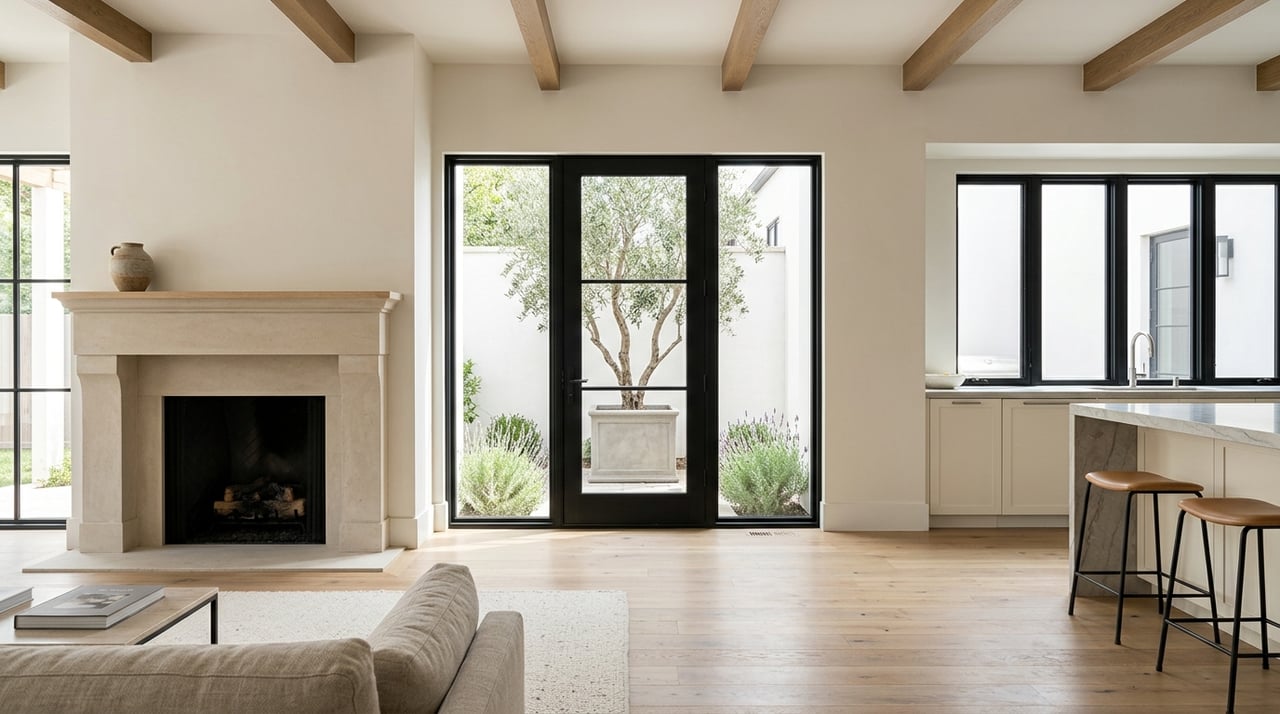
What to Know About the Saratoga Luxury Real Estate Market
May 28, 2026
May 28, 2026
If you have been watching Saratoga real estate, you already know this is not a market where a simple price-per-square-foot rule tells the whole story. Luxury in Saratoga is shaped by land, privacy, topography, design, and how well a home fits its setting. If you are thinking about buying or selling here, understanding those details can help you make smarter decisions and avoid expensive mistakes. Let’s dive in.
Saratoga sits at the top end of Silicon Valley pricing, and the numbers make that clear. Redfin reported a March 2026 median sale price of $4.1 million, while Zillow’s current home value index places the average home value at about $4.21 million. In other words, Saratoga’s overall market already operates at a price level that many areas would consider luxury.
Current listing snapshots help show how the local luxury segment works in practice. Redfin’s Saratoga luxury page showed 70 luxury homes with a median listing price of $3.94 million, while Zillow showed 63 luxury results. Based on current inventory, a practical working range appears to start in the high $3 million to low $4 million range, move into roughly $6 million to $8 million for larger turnkey homes, and reach $10 million or more for custom estates and scarce land opportunities.
That matters because Saratoga’s luxury floor is much higher than the national benchmark. Realtor.com’s March 2026 luxury report put the national entry point around $1.25 million, but Saratoga is in a very different category. Here, buyers are often evaluating not just size and finishes, but also lot utility, privacy, and future potential.
One reason Saratoga stands out is how it compares with nearby cities. Redfin currently shows Saratoga at a $4.1 million median sale price, compared with $3.4 million in Cupertino and $2.5 million in Los Gatos. That spread helps explain why buyers moving within the West Valley often compare these markets side by side.
In Saratoga, the conversation usually shifts quickly from basic specs to the quality of the site itself. Two homes with similar square footage can perform very differently if one offers better privacy, more usable outdoor space, or easier expansion potential. For sellers, that means your home needs to be positioned against the right local alternatives, not just broad citywide averages.
In Saratoga’s luxury market, land can matter just as much as the house sitting on it. The city’s zoning rules tie allowable floor area to the lot’s net site area, and site coverage can decrease as lots get larger. In hillside residential areas, site coverage is capped at 25% or 15,000 square feet, whichever is less, and setback and height rules are more restrictive.
The city also states that slopes above 10% can reduce the net site area used for floor-area calculations. That means a property with impressive acreage may not always offer the buildability you expect on paper. For buyers, this can affect renovation plans or future expansion. For sellers, it can shape how the property should be priced and marketed.
This is why raw lot size is only the starting point. Usable land often carries more weight than total acreage. A flatter lot with better access, fewer constraints, and more functional yard space may attract stronger interest than a larger parcel with steeper terrain or design limitations.
Saratoga requires design review for new homes and major additions, and the planning department highlights several factors that can affect a project. These include property boundaries, easements, slope, protected trees, wildfire urban interface exposure, geotechnical constraints, and ridgelines. Each of these can influence cost, timeline, and what a future owner can realistically do with the property.
There are also specific development considerations tied to fire safety and tree protection. Properties in the wildfire urban interface need a five-foot nonflammable buffer around structures. Construction near protected-tree canopies can also trigger arborist review.
For luxury buyers, this means due diligence matters. For luxury sellers, it means a property with hillside conditions or mature trees often needs a more thoughtful strategy from the start. The value is not just in the address or the square footage, but in how clearly the lot’s opportunities and constraints are understood.
Saratoga does not have one single luxury style. The city’s heritage inventory documents a broad mix that includes Craftsman, Neoclassical, Renaissance Revival, Italian Villa, Mediterranean Revival, Spanish Eclectic, Mission Revival, Tudor Revival, Colonial Revival, Ranch, Mid-century Modern, and Bay Regional homes. That variety is part of what makes the market interesting.
Today’s luxury inventory reflects that same range. You will see older homes with strong architectural character, remodeled residences that blend original design with modern updates, and new-construction homes in the 4,500 to 7,500 square foot range. Buyers at this level are usually not just counting bedrooms or comparing appliance brands. They are judging whether the home feels authentic to the lot, the setting, and the price point.
That is especially important in areas near Saratoga Village, where the city is preserving historic character through objective design standards. If a home is older or located near the village core, architectural fit and remodel quality may influence buyer response more than flashy upgrades alone.
Saratoga’s luxury activity spans several distinct areas. Redfin’s luxury page notes current activity in neighborhoods such as Rinconada, Glen Una, Saratoga Woods, West Valley, and Montalvo. While the homes in those areas can all fall under the luxury umbrella, the buyer appeal may differ based on setting, lot pattern, privacy, and housing style.
This is one reason luxury pricing in Saratoga requires precision. A home is not just competing with others at a similar price. It is competing with alternative settings and property types across several micro-markets. Buyers often weigh whether they prefer an in-town location, a more secluded estate feel, or a larger parcel with long-term potential.
Even at high price points, Saratoga can move quickly. Redfin reported a median of 11 days on market in March 2026, with about two offers on average, and Realtor.com said homes sold for approximately asking on average that month. That is a strong sign that demand remains healthy when a property is aligned with the market.
Still, luxury homes are usually more sensitive to pricing and presentation than the broader market. A well-positioned Saratoga property may move quickly, but a home with pricing gaps, deferred maintenance, lot complexity, or narrow buyer appeal can take longer. Luxury buyers tend to be selective, and they expect a clear reason for the asking price.
When a Saratoga luxury home lingers, the cause is often predictable. Common issues include aggressive pricing, condition concerns, a unique or difficult lot, hillside or wildfire urban interface complexity, permit questions, or design choices that narrow the buyer pool. These factors can make a home harder to compare and harder for buyers to underwrite with confidence.
That is why pricing discipline matters so much in this market. A seller cannot rely on a headline median and assume the market will fill in the blanks. The most effective pricing strategy is built around relevant comparable sales, lot utility, condition, and the story the property can credibly support.
Presentation matters too. Buyers need to understand not just what the home is, but why it stands out. In a market like Saratoga, the right visuals, prep plan, and positioning can reduce uncertainty and help buyers move faster.
If you are buying in Saratoga’s luxury segment, it helps to look beyond the obvious. A beautiful home may still come with site or planning constraints that affect long-term enjoyment or future value. You want to understand how the lot functions today and what it may allow tomorrow.
Focus on questions like these:
In this market, confidence comes from clarity. The more you understand the site and the competitive landscape, the better positioned you are to make a disciplined offer.
If you are selling a luxury home in Saratoga, preparation is rarely optional. Buyers at this level expect polished presentation, clear pricing logic, and a home that feels ready for scrutiny. If the property has complexity, your marketing has to explain it clearly rather than hope buyers overlook it.
A smart seller strategy often includes:
That approach protects both time and leverage. In a high-value market, small strategic mistakes can translate into large financial ones.
Saratoga’s luxury market is sophisticated because the homes themselves are often complex. The city’s pricing, lot rules, architectural variety, and neighborhood differences all create a market where execution matters. Buyers need structure and clear analysis. Sellers need preparation, pricing discipline, and marketing that reflects what truly drives value.
That is where local experience can make a real difference. A strong advisor helps you interpret the details, avoid generic assumptions, and make decisions based on how Saratoga actually works. In a market where every dollar matters, that kind of strategy is not a bonus. It is part of the job.
If you are planning a move in Saratoga and want a clear, numbers-driven strategy, Aaron Derbacher can help you evaluate the market, position your home, or navigate a purchase with confidence.
Stay up to date on the latest real estate trends.
Aaron brings a breath of fresh air to an often-chaotic California Real Estate process. He is committed to going the extra mile for every client during every transaction, something he sees as the most important fiduciary duty for any real estate professional.
16780 LARK AVE FRNT LOS GATOS CA 95032